As global warming accelerates and policy landscapes evolve, credit analysts face an urgent imperative to account for climate-related dangers. Beyond traditional financial metrics, lenders must understand how extreme weather and low-carbon transitions reshape borrowers’ ability to repay. This article offers a comprehensive roadmap to embrace forward-looking scenarios and build dynamic risk assessments into every stage of credit evaluation, fostering resilient portfolios and sustainable growth.
By weaving narrative with practical guidance, we aim to inspire finance professionals to champion change, mobilize data, and craft strategies that protect both capital and the planet.
Understanding Climate-Induced Credit Risks
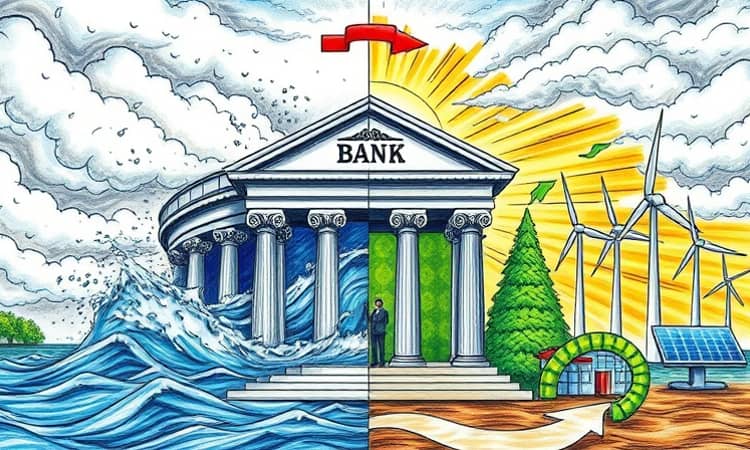
Climate risks in credit analysis fall into two broad categories: physical dangers from floods, heatwaves, storms and wildfires, and transition perils arising from policy shifts, carbon pricing and rapid technological change. Both channels undermine borrowers’ cash flows, shrink asset values and increase default probabilities.
Physical events can disrupt operations, damage property and trigger insurance losses. Transition measures—such as new efficiency standards, carbon taxes or phase-outs of fossil fuels—can render assets stranded, inflate production costs and depress revenues.
Recognizing these threats is the first step. Analysts must map how each risk type affects corporate and household balance sheets. Leveraging science-based scenarios helps quantify potential losses and calibrate risk metrics.
Integrating Scenarios into Risk Assessment
Effective climate risk analysis relies on robust scenario design. Organizations such as the Network for Greening the Financial System provide pathways that detail greenhouse gas trajectories, policy interventions and temperature outcomes.
To translate scenarios into credit metrics, follow a three-step framework:
- Develop tailored climate scenarios that reflect sector sensitivity, geographic exposure and regulatory timelines.
- Estimate economic impacts at macro and micro levels, linking changes in GDP, commodity prices and operating costs to borrower cash flows.
- Convert these projections into probability of default (PD) and loss given default (LGD) using modified structural models that treat equity as an option on assets.
Embedding these steps into existing risk systems ensures that climate considerations are not an afterthought but a core driver of credit decisions.
Implementing Climate-Smart Credit Practices
Building a climate-resilient credit operation demands a strategic approach that spans policy, data, governance and talent. Banks and investors can adopt the following roadmap:
- Develop a climate taxonomy: Create a heatmap scoring exposures based on emissions intensity, sectoral transition readiness and physical hazard exposure.
- Embed in origination: Integrate climate questions into credit proposals—assess decarbonization plans, asset resilience and supply-chain vulnerabilities.
- Enhance monitoring: Conduct periodic stress tests using both physical and transition scenarios, tracking shifts in PD and LGD over long horizons.
- Strengthen data governance: Collect and validate firm- and portfolio-level metrics such as carbon footprints, adaptation investments and regulatory compliance status.
- Invest in expertise: Hire climate risk specialists and train credit officers on emerging science, policy trends and scenario analysis techniques.
Through these steps, financial institutions can transition from reactive reporting to proactive risk management, ensuring portfolios remain robust under a range of climate futures.
Navigating Challenges and Building Resilience
Despite growing awareness, many organizations struggle with data scarcity, model complexity and governance shortcomings. Historical time series seldom capture unprecedented climate extremes, forcing reliance on forward-looking scenarios and expert judgment.
Extended time horizons pose calibration difficulties for traditional credit models. Firm-level emissions data can be patchy, and sector-specific vulnerability assessments require high granularity. Scenario assumptions about policy timing, technological advancement and consumer behavior further amplify uncertainty.
To overcome these hurdles, institutions should:
- Engage with data vendors and open-source initiatives to access granular climate and exposure data.
- Perform A/B testing by comparing risk metrics across regions or sectors with varying climate profiles.
- Establish clear governance frameworks that assign accountability for climate risk strategy, implementation and oversight.
By reinforcing data pipelines and decision frameworks, organizations can reduce model risk and increase confidence in their climate stress testing outcomes.
Charting the Path Forward
As regulators and markets intensify scrutiny of climate-related disclosures, credit institutions must adapt rapidly. Supervisory bodies emphasize the need for clear policies to identify, measure and monitor climate credit risks, urging banks to preserve portfolio invariance in internal models while integrating new risk drivers.
Commercial solutions from Moody’s, S&P Global and other vendors offer sophisticated stress testing platforms that combine climate science with credit analytics. Yet, technology is only one part of the puzzle: true resilience emerges when organizations create a culture of sustainability, empower teams with the right skills and align incentives with long-term value creation.
Summary of Key Metrics
This overview highlights how diverse metrics converge to shape a comprehensive credit risk profile that accounts for both imminent physical hazards and evolving policy landscapes.
Embracing a Sustainable Credit Future
By proactively integrating climate considerations into credit analysis, financial institutions can not only safeguard their portfolios but also drive positive environmental outcomes. Moving beyond compliance, they have the power to channel capital toward resilient businesses, innovative technologies and communities that thrive in a changing world.
Ultimately, the transition to a low-carbon economy presents both risks and opportunities. Lenders that embrace climate-smart strategies, invest in data and expertise, and foster collaborative partnerships will lead the way, unlocking sustainable value and building a safer financial system for all.