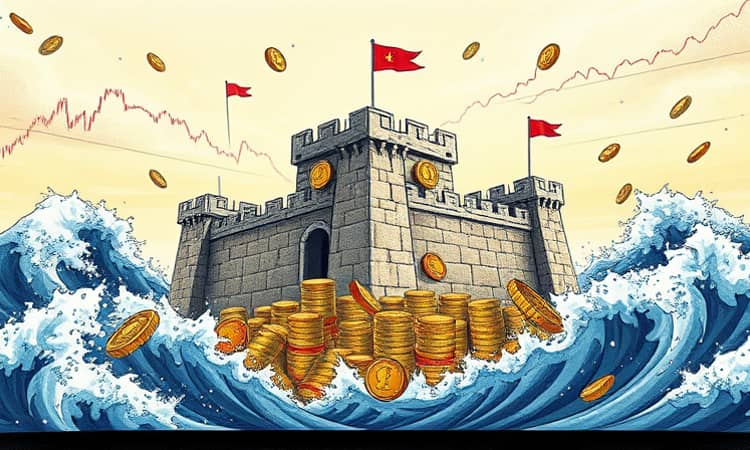
In an era defined by rapid policy shifts and episodic market turbulence, the art of investing has returned to its roots: preserve what you have, then seek opportunities. Defensive investing, far from being conservative, empowers investors to weather storms and emerge ready for the next leg up.
Understanding the Defensive Approach
At its core, defensive investing places capital preservation over aggressive growth. It relies on the principle that keeping money in the market, rather than being wiped out by steep declines, is the most effective way to build wealth over decades.
Historical studies show that a 20% market decline demands a 25% gain merely to break even. That simple math reveals why protective measures—like high-grade bonds and dividend-paying equities—serve as the first line of defense when volatility strikes.
The journey also demands psychological resilience. Watching peers chase outsized returns can be tempting, but sticking to a defense-first plan often provides lasting financial peace of mind.
Navigating 2026’s Uncertain Landscape
Looking ahead to 2026, investors face a thicket of intertwined risks. Central banks are poised to recalibrate rate paths amid still-elevated inflation. Simultaneously, the end of quantitative tightening promises improved liquidity but raises questions about market dependence on stimulus.
Trade tensions and geopolitical flashpoints—from tariffs on key imports to emerging defense alliances—further complicate the outlook. In parallel, artificial intelligence is reshaping productivity and competition, rewarding certain sectors while leaving others vulnerable to disruption.
Within equity markets, concentration has reached historic highs. The largest tech names command lofty multiples that may be ripe for mean reversion, threatening index performance if a rotation occurs. Such dynamics underscore why a defensive overlay can act as a prudent ballast.
Fixed Income Foundations
Defensive portfolios often anchor in bonds for their ability to dampen volatility and provide steady cash flows. Favoring short- and intermediate-term maturities allows investors to capture attractive yields while maintaining flexibility to adjust as interest rates ebb and flow.
With the Bloomberg U.S. Aggregate Index yielding north of 4.3%, high-quality bonds offer both income and downside cushioning. Currency-hedged global sovereigns can deliver even richer returns for U.S. investors seeking additional diversification.
- Choose investment-grade credits with stable fundamentals to avoid needless defaults.
- Consider private credit platforms, where sponsors offer innovative nontraditional income opportunities.
- Use municipal bonds for a tax-efficient layer of defense, particularly if you reside in a high-tax bracket.
Nontraditional asset-backed securities, including equipment loans or insurance-linked structures, add creative alternatives. Many have demonstrated resilience through past crises, providing investors with fresh sources of yield in a crowded marketplace.
Equities and Income Generation
Even within equities, not all stocks move in lockstep. Dividend aristocrats—companies raising payouts annually for decades—often showcase sufficient earnings visibility to sustain distributions during downturns. In sectors like consumer staples and healthcare, demand remains relatively inelastic.
International equities in regions such as the United Kingdom and Brazil also offer compelling inflation hedges and real yields. While every market has its own set of risks, combining global exposures can smooth idiosyncratic shocks.
Real estate investment trusts (REITs) present an additional layer of income. With property fundamentals still recovering in many areas, well-capitalized REITs can deliver both steady consistent dividend distributions and potential capital appreciation.
Multi-Asset and Alternative Diversifiers
Static allocations to stocks and bonds risk missing opportunities in niche areas. Allocating a portion of portfolios to alternatives—such as systematic trend-followers or risk parity strategies—can reduce correlation with broad markets and capture unique sources of return.
In the realm of private markets, direct lending and BDCs (business development companies) have extended credit to middle-market firms with conservative covenants. These structures often maintain low net leverage and have withstood multiple economic cycles without elevated loss rates.
Real assets like infrastructure, timberland, and farmland can shield against inflation and resource scarcity. While less liquid, they offer true diversification from financial markets, reflecting the enduring value of tangible assets.
Historical Perspective: Lessons from Past Downturns
During the global financial crisis of 2008, portfolios rich in high-quality bonds and defensive equities fared significantly better than those heavily weighted to leverage or speculative technology names. Likewise, in the pandemic-induced selloff of 2020, diversified bond portfolios limited drawdowns and enabled rapid redeployment when markets rebounded.
These episodes teach that resilience is not mere luck but a product of intentional design. A diversified, quality-focused portfolio acts like a financial life raft, keeping investors afloat and psychologically prepared to capitalize on subsequent recoveries.
Actionable Steps for Investors
- Rebalance convictions: routinely trim positions that run ahead and top up defensive bulwarks.
- Maintain a cash buffer to exploit volatility-driven discounts immediately.
- Implement bottom-up credit selection for margin of safety in fixed income allocations.
- Monitor geopolitical and policy developments, adjusting allocations to stay aligned with your risk tolerance.
Starting with a clear rule set—such as maximum drawdown limits or target yield thresholds—injects discipline into decision-making and helps avoid emotional trade-offs when markets turn turbulent.
Ultimately, defensive investing is not about hiding from opportunity, but rather about building the optionality to act decisively when market turmoil creates compelling bargains. With high-quality bonds, income-generating equities, and diversified alternatives, investors cultivate long-term resilience and growth potential simultaneously.
By embracing a defensive mindset now, you position your portfolio to endure the inevitable market challenges of 2026 and beyond, ready to accelerate when the winds of change usher in a new phase of opportunity.