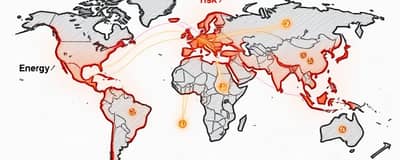
Emerging markets (EM) offer investors both promise and peril. In an era of rapid globalization, the stakes are higher, and the rules are constantly evolving. Heightened volatility and uncertainty define this landscape, demanding innovative approaches and steadfast discipline.
In this article, we explore how analysts can integrate robust frameworks, harness data wisely, and anticipate external shocks to thrive in EM credit assessment.
The Complex Web of Sovereign and Systemic Risk
At the heart of EM credit analysis lies the intimate link between sovereign health and private-sector resilience. Banks and corporations in these regions often operate under the shadow of government ratings, fiscal pressures, and policy shifts.
Macroeconomic factors—such as inflation spikes, currency swings, and sudden regulatory changes—can cascade into the financial sector, amplifying credit stress. Meanwhile, spillovers from advanced economies, including shifts in US monetary policy or escalating trade tensions, add layers of unpredictability.
A comprehensive approach requires analysts to view sovereign and systemic dynamics as two sides of the same coin. When a government’s fiscal position weakens, the ripple effects can strain banks’ capital buffers and corporate balance sheets, leading to unexpected defaults.
Data Limitations and Our Perception of Risk
Unlike developed markets, EMs often suffer from incomplete or opaque data, making traditional models unreliable. Limited historical records can fuel overly pessimistic assessments, driving credit spreads higher than fundamentals warrant.
The GEMs consortium, pooling data on over 15,000 loans totalling more than $500 billion, offers a powerful counterpoint. Between 1994 and 2023, this dataset revealed private-sector default rates far below sovereign-implied expectations—2.3% in high-income markets and 6.3% in low-income nations, with average recovery rates near 40%.
These findings challenge entrenched views of excessive risk in low-income EMs. They underscore the value of granular loan-level analysis and point to the mitigating role of multilateral development banks (MDBs) and development finance institutions (DFIs).
Adapting the CAMELS Framework
Credit analysts rely on structured methodologies to evaluate bank health. In EMs, the CAMELS framework—Capital adequacy, Asset quality, Management, Earnings, Liquidity, Sensitivity to market risk—remains central, but it requires adaptation.
Key adjustments include stressing currency mismatches, factoring in market illiquidity, and compensating for data gaps with conservative assumptions. By layering sovereign risk assessments on top of CAMELS insights, analysts can better gauge the true buffer banks possess against macro shocks.
Beyond banks, rating models for corporates follow a similar path. A four-step process guides many frameworks:
- Assess sovereign and operating environment
- Evaluate business franchise and performance risk
- Analyze financial fundamentals and stress scenarios
- Estimate likelihood of government or shareholder support
This blueprint helps differentiate exposures, prioritize due diligence, and assign more accurate probabilities of default.
External Threats and Early Warning Systems
Emerging markets are particularly vulnerable to global shocks—geopolitical tensions, trade disputes, and changes in interest rates abroad. For instance, a sudden Federal Reserve hike can trigger capital outflows, currency depreciation, and rising debt-servicing costs.
Early warning signals are vital. Analysts track credit expansion rates, current account deficits, short-term external debt levels, and valuations that deviate sharply from fundamentals. Market indicators—equity prices, bond spreads, and CDS data—offer real-time cues to unfolding stress.
By integrating quantitative triggers with expert judgment, teams can prioritize sectors or issuers that warrant closer scrutiny, enabling timely risk mitigation strategies.
Opportunities, Resilience, and Strategic Pathways
Despite challenges, EM debt instruments have grown nearly twenty-fold over the past two decades. This expansion delivers diversified issuance, deeper markets, and improved risk-adjusted returns when approached with a bottom-up lens.
Capitalizing on opportunities entails recognizing structural drivers—demographic growth, urbanization, technological adoption—and pairing them with effective risk mitigation strategies. Collaboration with MDBs and DFIs can lower entry hurdles and enhance project viability in frontier markets.
- Focus on sectors with natural hedges, such as export-oriented industries
- Leverage local partnerships to improve transparency and governance
- Implement dynamic hedging to manage currency mismatches
- Build layered portfolios across regions, ratings, and maturities
Putting Theory into Practice: Case Studies
To illustrate practical application, consider a regional bank in a middle-income country facing currency volatility and tightening global conditions. A four-step analysis revealed robust deposit funding, prudent loan underwriting, and conservative currency exposure limits. Sovereign risk scores were moderate, but government support likelihood was high given systemic importance.
In another case, a consortium of DFIs structured a private-sector loan package in a low-income nation. By syndicating risk across multilateral partners, they achieved recovery rates above 50% despite a 6% default environment—underscoring how external support frameworks can tilt outcomes favorably.
Such real-world examples demonstrate that disciplined, bottom-up credit assessments—and an integrated view of sovereign and systemic dynamics—unlock superior insights and shield portfolios from unexpected downturns.
Conclusion and Next Steps
Emerging markets present both formidable challenges and compelling opportunities. Analysts and investors who embrace tailored frameworks, leverage rich datasets like GEMs, and remain vigilant to external shock factors will be best positioned to navigate this terrain.
Ultimately, success rests on combining rigorous quantitative models with informed judgment. By adapting the CAMELS framework, implementing early warning systems, and collaborating with development institutions, credit professionals can transform volatility into a pathway for growth and resilience.
As 2026 unfolds, the lessons of the past three decades—coupled with evolving geopolitical currents—will continue to reshape the EM credit landscape. Steadfast focus, continuous learning, and bold innovation will light the way forward.