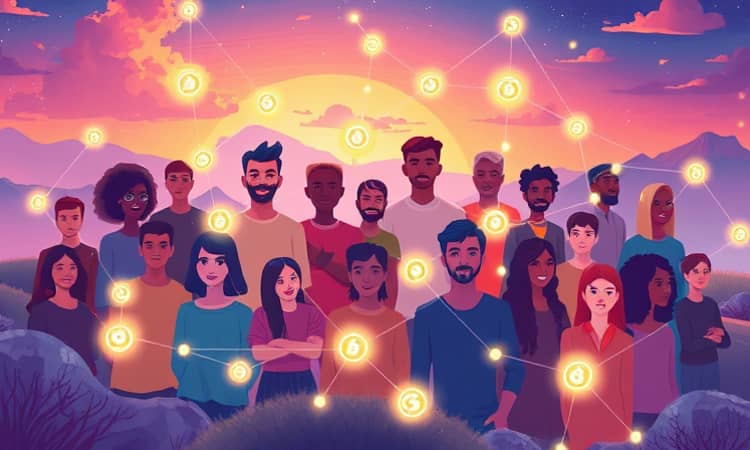
Decentralized Autonomous Organizations (DAOs) represent a profound shift in how communities and projects organize, govern, and scale. By leveraging blockchain technology, these entities operate without centralized leadership, empowering participants around the globe to collaborate seamlessly and transparently. In this article, we delve deep into the evolution, mechanics, impact, and future of DAOs, offering practical insights for anyone looking to understand or join these transformative communities.
Origins and Evolution of DAOs
The concept of DAOs emerged as an evolution of traditional organizations. Early experiments like “The DAO” on Ethereum in 2016 showcased both the potential and pitfalls of automated governance. While that experiment suffered a high-profile security breach, it laid the groundwork for more robust frameworks.
Over time, developers introduced enhancements such as automated governance through smart contracts and multi-signature security protocols. These innovations helped DAOs transition from proof-of-concept to practical tools for coordinating decentralized efforts, ranging from open-source software to global grant-making funds.
Operational Mechanisms: How DAOs Work
At the heart of every DAO lies a set of smart contracts—self-executing code that enforces rules, proposals, and finance autonomously. The typical flow involves:
- Creation: Developers deploy a collection of smart contracts on a blockchain network.
- Funding: A treasury is established, often through token sales or grants.
- Governance: Token holders submit, discuss, and vote on proposals.
- Execution: Approved proposals trigger contract functions automatically.
Members participate from anywhere via online platforms such as forums, chat channels, or specialized governance dashboards. Every decision, transaction, and vote is recorded on a transparent and incorruptible digital ledger, ensuring accountability at every step.
Types and Use Cases of DAOs
DAOs come in various structures, each tailored to specific goals and communities. The main categories include:
- Token-based DAOs: Governance rights tied to digital tokens (e.g., DeFi protocol governance).
- Equity-based DAOs: Share-like ownership, mirroring traditional corporate equity.
- Hybrid DAOs: Combine elements of token and equity models for flexible participation.
Common applications span finance, social networks, gaming, supply chains, and even public goods funding. To illustrate, the table below summarizes key DAO types and examples:
Market Growth and Impact
The DAO ecosystem has experienced remarkable expansion. While precise figures vary, industry reports highlight trends such as:
- DAO development market projected from USD 170 million in 2024 to USD 333 million by 2031.
- DeFi market growth from USD 14.35 billion in 2023 to over USD 42 billion by 2025.
- More than 43,000 patents filed in decentralization technologies by 2024.
These numbers underscore the accelerating adoption of decentralized governance as both a technological and social model. Institutions, startups, and individual contributors are rallying around DAOs to fund public goods, launch creative projects, and build resilient financial systems.
Advantages and Challenges
DAOs offer a range of benefits aligned with modern values of openness and inclusivity. Key advantages include:
- Borderless participation, welcoming contributors from any geography.
- Incentivized alignment of interests through token rewards for meaningful contributions.
- Reduction of bureaucracy, enabling agile decision-making.
However, DAOs also face significant hurdles:
- Regulatory uncertainty and evolving legal frameworks.
- Security vulnerabilities, as seen in early protocol exploits.
- Potential for voting power concentration among large token holders.
Real-World Examples and Case Studies
MakerDAO stands as a flagship DeFi DAO, managing billions in collateralized debt positions and distributing governance rights via MKR tokens. Its fully on-chain voting and treasury operations exemplify community-driven financial management.
Aave’s governance model leverages a dual-token system to balance voting power and incentives, showcasing how hybrid structures can enhance resilience. Beyond finance, investment DAOs like MetaCartel Ventures harness collective expertise to fund early-stage projects, democratizing venture capital.
The Future of DAOs
Looking ahead, DAOs are poised to integrate more deeply with emerging technologies such as the metaverse, decentralized identity, and artificial intelligence. Imagine virtual worlds governed entirely by participant votes, or supply chains transparently managed through DAO-led protocols.
Regulatory clarity will be a critical enabler. As policymakers and industry groups collaborate to define legal status, DAOs could gain access to traditional financial systems, insurance mechanisms, and compliance tools, further accelerating adoption.
Conclusion
Decentralized Autonomous Organizations embody a visionary approach to collaboration, governance, and value creation. By aligning technology with democratic principles, DAOs empower individuals to participate in projects that span continents and cultures, fostering innovation that is both inclusive and transparent.
Whether you are a developer, investor, creator, or enthusiast, there is a place for you within the world of DAOs. Engage with communities, propose ideas, and contribute skills to help shape a future where collective intelligence drives progress for everyone.