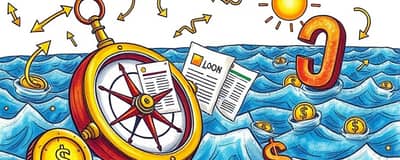
In an era of rising environmental challenges and shifting economic priorities, mobilizing capital for low-carbon transition has never been more critical. Green finance and sustainable finance are building bridges between the world of money and the health of our planet, guiding investors, lenders, and policymakers toward decisions that deliver both financial returns and ecological resilience.
This comprehensive guide explores how credit decisions can embrace environmental, social, and governance factors to drive real-world impact. You will discover practical steps, inspiring examples, and proven strategies that empower financial institutions and individuals to integrate sustainability deeply into lending practices.
Understanding Green Finance and Its Evolution
Green finance is a focused branch of sustainable finance that channels resources into projects with direct positive environmental impacts. From solar farms and wind parks to biodiversity initiatives and pollution prevention, its scope emphasizes climate mitigation and conservation efforts.
By contrast, sustainable finance adopts a broader lens, weaving environmental, social, and governance (ESG) considerations into every decision. It not only funds eco-friendly projects but also promotes social equity, ethical governance, and long-term value creation.
Climate finance, meanwhile, zeroes in on greenhouse gas emission reductions and adaptation strategies. Complementing these is transition finance, which supports high-emission industries on the journey toward greener operations, fostering technological advancement where immediate solutions aren’t yet available.
The Role of ESG in Lending Decisions
Embedding ESG criteria in credit evaluations transforms traditional risk assessments. Financial institutions now implement stringent environmental screening to appraise potential carbon footprints, biodiversity impacts, and resource use before approving loans.
Governance and social factors are equally vital. Ethical board structures, transparent reporting, and community well-being emerge as key determinants of creditworthiness. By adopting a holistic ESG lens, lenders manage hidden risks—like stranded assets—and align portfolios with global commitments such as the Paris Agreement and the UN Sustainable Development Goals.
Instruments and Products Driving Change
Innovative financial products are at the heart of green and sustainable finance. Among the most influential are:
- Green bonds funding emission reduction projects, from wind farms to energy-efficient buildings.
- Sustainability-linked loans offering lower interest rates tied to ESG performance targets, such as carbon intensity reduction or water conservation metrics.
- Impact investing that prioritizes measurable social and environmental benefits alongside financial returns.
These instruments encourage borrowers to adopt best practices while offering investors transparency and accountability. Major issuers of green bonds include the United States, China, and France, reflecting surging global demand for sustainable debt markets.
Real-World Examples and Tangible Impact
Leading financial institutions and development funds are setting benchmarks. The Clean Energy Finance Corporation (Australia) has invested over $10 billion in renewable projects since 2012, accelerating solar and wind energy adoption nationwide.
Similarly, international vehicles like the Green Climate Fund and structured green funds have deployed billions in emerging economies, financing clean public transport, water sanitation, and sustainable agriculture initiatives.
Benefits and Challenges of Green Credit Decisions
Green and sustainable finance unlocks a wealth of advantages: reduced risk exposure to environmental shocks, access to new market segments, enhanced reputation, and alignment with regulatory frameworks. Investors increasingly demand ESG-conscious portfolios, while regulators incentivize green lending through tax benefits and streamlined approvals.
However, challenges persist. The specter of greenwashing—where alleged green projects fail to deliver real impact—demands rigorous monitoring and verification. Data gaps, inconsistent standards, and complex measurement methodologies can hinder effective implementation.
Best Practices for Implementation
To navigate this landscape successfully, financial institutions and project sponsors should adopt these proven approaches:
- Define clear goals and metrics at the outset; establish baseline data for carbon, biodiversity, and social indicators.
- Integrate ESG criteria into credit scoring models and underwriting guidelines for comprehensive risk assessments.
- Engage stakeholders—communities, regulators, investors—to build trust and ensure alignment with sustainability objectives.
- Use third-party certifications and frameworks, such as the Green Bond Principles, to enhance credibility and transparency.
Investing in staff training and professional certifications, like the Certificate in Green and Sustainable Finance, empowers teams to design and evaluate impactful products effectively.
Charting the Path Forward
Your institution can be a catalyst for change. Start by reviewing existing credit policies through an ESG-focused lens and identifying quick wins, such as preferential rates for energy-efficient projects or pilot green bond issuances.
Gradually expand the approach: develop transition finance roadmaps for high-emission sectors, partner with development agencies to de-risk innovative projects, and share progress through transparent reporting. By doing so, you will foster resilience, unlock new opportunities, and contribute meaningfully to global climate and development goals.
The moment for action is now. Every loan, bond, and investment decision has the power to shape our planet’s future. Embrace green finance, apply sustainable credit principles, and join a growing movement that proves profitability and responsibility can—and must—go hand in hand.