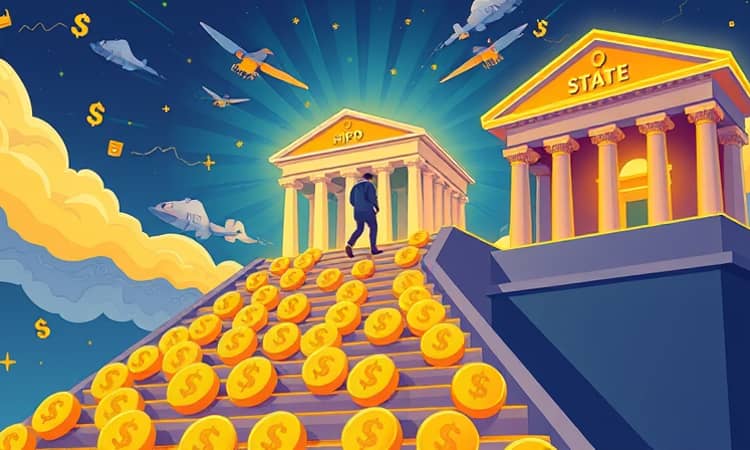
The journey from private enterprise to publicly traded company represents a pivotal moment in a business’s life. An IPO is a gateway to new capital, greater visibility, and an expanded shareholder base. Yet, along with opportunity comes complexity and responsibility.
Understanding IPOs: Definition and Purpose
An initial public offering (IPO) marks the first time a previously private company sells its shares to public investors. Once complete, the business transforms into a publicly traded company, with its shares buying and selling freely on secondary markets.
Why pursue this path? For many founders and investors, the IPO serves multiple strategic purposes:
- Raise equity capital to fund growth in research, expansion, acquisitions, and capital expenditures.
- Provide an exit or liquidity event for founders, venture capitalists, and private equity backers.
- Use public shares as currency in mergers, acquisitions, and employee compensation packages.
- Enhance brand visibility, credibility, and transparency among customers, partners, and lenders.
- Diversify and deepen the overall shareholder base, fostering wider support.
Key Trade-Offs: Weighing Pros and Cons
Going public brings undeniable advantages, but also introduces ongoing demands on management and governance. Companies must carefully evaluate these trade-offs before committing.
- Pros: Access to large, relatively cheap capital pools; ability to raise follow-on capital; liquidity and market valuation benchmarks.
- Cons: Ongoing regulatory and disclosure burden; market pressure for quarterly results; significant costs for banks, lawyers, and auditors; risk of dilution or activist investors.
The Traditional IPO Process: Step by Step
Transforming from private to public is a multistage journey involving careful planning, rigorous compliance, and persuasive marketing.
1. Decision and Preparation: The board and major shareholders decide to pursue an IPO once the company attains sufficient scale and maturity. Internal teams upgrade financial reporting, strengthen internal controls, and refine the corporate governance framework. Simultaneously, management crafts an IPO “story”—highlighting growth drivers, unit economics, and addressable market size.
2. Hiring Underwriters and Advisors: The company partners with one or more investment banks to structure, market, and distribute the offering. In a syndicate, a lead bank acts as the bookrunner, supported by co-managers. Underwriting fees typically range from 3% to 7% of gross proceeds.
3. Regulatory Filings and Due Diligence: In the U.S., the issuer files a registration statement (Form S-1) with the SEC. This document encompasses a business overview, historical financials, risk factors, use of proceeds, share structure, and biographies of key executives. A preliminary prospectus—known as the “red herring”—is circulated to investors while the SEC reviews and comments. The company revises until the registration becomes effective.
4. Marketing: Roadshow and Book-Building: Company leadership and underwriters embark on a roadshow, presenting to institutional investors and assessing demand. During this phase, book-building captures investor interest at various price levels, helping to refine the proposed price range.
5. Pricing and Allocation: Based on book-building data and market conditions, the issuer and underwriters set the final IPO price and share count. The final prospectus is updated accordingly. Shares are then allocated to institutional and retail investors, guided by the underwriter’s allocation strategy.
6. Listing and First Trading Day: When the SEC declares the registration effective, the company’s shares list on an exchange and begin trading. Underwriters may support share price stability in the initial trading period to prevent excessive volatility.
7. Post-IPO Obligations: A typical lock-up period (often 180 days) restricts insiders from selling shares immediately. Thereafter, the company must comply with periodic reporting requirements (e.g., 10-K, 10-Q, 8-K), maintain robust internal controls, and manage investor relations with transparency and consistency.
Alternative Paths to Public Markets
While the traditional IPO remains the most common route, companies can explore other methods to access public capital:
- Direct Listings allow existing shareholders to list their shares on an exchange without issuing new stock or engaging underwriters for price-setting, enabling market-driven price discovery.
- SPAC De-SPAC Mergers involve a special purpose acquisition company that raises funds through its own IPO and later merges with a private business, bringing it public via a reverse merger.
Global and U.S. IPO Market Trends
The IPO landscape in 2025 has shown remarkable resilience and growth, particularly in the United States. After a slowdown in 2022, the market rebounded significantly, driven by sponsor-backed and VC-backed issuers, as well as strong technology and AI infrastructure names.
September 2025 emerged as the busiest month since late 2021, with 13 IPOs raising over $8 billion. Meanwhile, sponsor-backed IPOs reached their highest levels since 2021, and VC-backed issuers delivered average first-day returns near 30%.
Seizing the Opportunity: Inspiration and Practical Tips
For entrepreneurs and executives, an IPO represents more than capital—it signifies recognition of operational maturity and a vote of confidence from the market. Yet success demands meticulous preparation, clear communication, and relentless execution.
Consider these practical steps to harness the full potential of an IPO:
- Cultivate a robust internal infrastructure: Prioritize accurate financial reporting, risk management frameworks, and ethical governance practices.
- Build a compelling narrative: Articulate your value proposition, growth strategy, and market opportunity with clarity and conviction.
- Engage investors early: Use pre-IPO investor days and advisory boards to gather feedback and build relationships ahead of the roadshow.
- Plan for life as a public company: Anticipate quarterly disclosure obligations, investor relations demands, and potential activist pressures.
Conclusion: Embracing the First Chance
An IPO is both a celebration and a commitment. It celebrates past achievements and milestones, while committing the company to ongoing transparency, accountability, and growth. By understanding the process, weighing the trade-offs, and preparing diligently, businesses can transform their first chance in new markets into a sustainable platform for long-term success.
The path may be demanding, but for those who navigate it effectively, the rewards—access to capital, enhanced credibility, and a broader investor base—can accelerate innovation and open doors that once seemed out of reach.