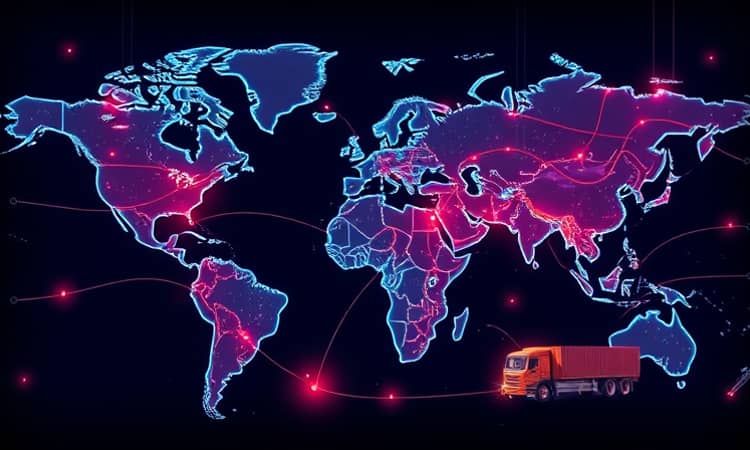
As commerce spans continents and consumer expectations rise, supply chains must evolve. Blockchain technology offers a pathway to unprecedented efficiency, security, and sustainability.
By 2026, experts project a 15% increase in global trade volume and a 5% boost to U.S. GDP through widespread blockchain adoption in logistics. Already, 54% of international logistics providers leverage these tools, reporting a 36% reduction in documentation errors and a 31% drop in counterfeit activities.
Unleashing Efficiency and Transparency
Blockchain’s core strength lies in its distributed ledger architecture. Each stakeholder records transactions in a shared, immutable chain, ensuring trust without intermediaries. This transparent framework transforms traditional processes.
- immutable transparency curbs fraud for end-to-end traceability and compliance
- real-time visibility and monitoring of goods prevents spoilage and bottlenecks
- smart contracts automate complex transactions upon predefined milestones
- automatic fraud prevention reduces risk across global networks
- ethical sourcing and product provenance tracked via digital ledgers
- faster payments and settlements with minimal manual intervention
These advantages not only drive operational excellence but also enhance stakeholder confidence. For pharmaceuticals, compliance with the DSCSA 2023 becomes seamless. In finance, ING slashed letter of credit processing time from 5–10 days to under 24 hours. Tracifier’s Oracle Blockchain implementation cut food processing costs by up to 40% through automated quality checks and transparent ledgers.
Transformative Use Cases Across Industries
From retail to ports, blockchain’s versatility shines. Leading organizations are pioneering pilots that demonstrate real-world impact and rapid ROI.
Walmart’s Food Trust network leverages blockchain to trace produce from farm to shelf, enabling near-instantaneous recalls. Maersk and IBM’s TradeLens platform has digitized shipping documentation, slashing delays and fraud in global maritime logistics. Automotive leaders like BMW and Renault use distributed ledgers to monitor parts authenticity and streamline supplier compliance.
These case studies prove that strategic pilots can scale quickly, delivering measurable cost savings and risk mitigation. Organizations across sectors—from Nestlé and Unilever to Hapag-Lloyd—are following suit.
Overcoming Implementation Challenges
Despite clear benefits, adoption hurdles persist. Initial investment in blockchain infrastructure can be high. Interoperability between disparate platforms requires robust standards. Regulatory landscapes vary by region, complicating global rollouts.
To navigate these challenges, companies should:
- Develop phased implementation plans, starting with high-impact pilots.
- Collaborate on industry-wide protocols to ensure seamless data exchange.
- Engage regulators early to align on compliance requirements.
- Train teams on new workflows and change management best practices.
By addressing technical and organizational concerns head-on, businesses can transform potential roadblocks into stepping stones for innovation.
Pioneering the Future: Trends for 2026 and Beyond
As blockchain matures, integration with other emerging technologies will redefine supply chain intelligence. Organizations that embrace these trends will secure a competitive edge.
- Integration of IoT sensors for predictive analytics for supply chains
- Adoption of digital product passports for sustainability
- AI-driven automated anomaly detection and alerts
- Tokenization models to incentivize transparency and trust
- Blockchain-enabled carbon tracking for sustainable green logistics solutions
Imagine a self-optimizing network where sensors detect temperature fluctuations, smart contracts trigger corrective actions, and carbon footprints are logged automatically. Such a vision moves beyond theory—pilot projects in cold chain management and carbon offset tracking are already underway.
Global adoption is accelerating. According to industry reports, competitive differentiation increasingly hinges on supply chain transparency. Early adopters are well-positioned to set new standards and shape regulatory frameworks.
In the coming years, expect to see deeper partnerships between blockchain platforms, AI providers, and IoT innovators. This convergence will unlock new levels of resilience, responsiveness, and responsibility in global commerce.
Blockchain integration represents more than a technological upgrade—it embodies a paradigm shift toward open, accountable, and dynamic supply chains. By harnessing this potential today, businesses can build a future where goods move faster, risks are minimized, and sustainability is ingrained in every link of the chain.