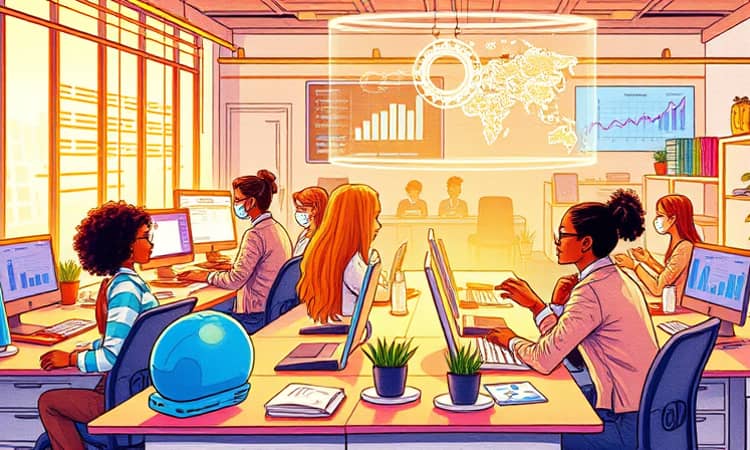
In 2026, the lines between human talent and artificial intelligence blur, ushering in an age of unprecedented opportunity and complexity. As traditional roles disintegrate under the weight of automation and hybrid work models, individuals must proactively reimagine their financial strategies.
These figures reveal a workforce in flux, where adaptability trumps static experience and continuous learning determines financial stability.
AI as Teammate and Productivity Driver
Once a simple automation tool, AI now occupies organizational charts as a full-fledged collaborator. Microsoft’s forecasts of AI agents making strategic recommendations are no longer hypothetical. As these systems shoulder routine analyses and communication tasks, employees can focus on higher-order thinking and innovation.
However, unchecked deployment has spawned the phenomenon known as “AI workslop,” where rushed outputs create more work than they save. CHROs and leaders must establish rigorous quality controls to ensure AI-driven insights maintain consistent accuracy and prevent costly errors.
Moreover, the rise of digital doppelgängers replicating individual work styles brings novel compensation challenges. Employees increasingly demand fees or revenue shares when companies train AI clones on proprietary data. Negotiating clear governance and licensing terms before contributing personal expertise safeguards both employer and worker interests.
By targeting AI at high-effort, low-value tasks—data synthesis, scheduling, basic reporting—rather than trivial chores, organizations can achieve a far more significant reduction in cognitive fatigue and operational overhead.
Outcome-Based Skills and Career Pivots
Job titles are giving way to fluid skill sets measured by outcomes rather than hours. A recent Deloitte study shows that 71% of workers already perform functions beyond their formal descriptions. In response, employers favor candidates who can demonstrate creative problem-solving and adaptive learning, gratitude for shifting demands.
AI roles have surged in value, with salaries climbing 27% since 2019. Yet the most resilient professionals combine technical fluency with human-centered capabilities like emotional intelligence, resilience, and curiosity. This hybrid skill profile is essential in a landscape where 71% of job postings become outdated within months.
For those reconsidering their trajectory, tech-to-trades pipelines offer compelling alternatives. Software developers, for instance, are retraining as electricians or advanced manufacturing technicians through accelerated apprenticeships. By investing in cross-disciplinary training, individuals can unlock sustainable career pathways insulated from full automation and command wage premiums.
Fluid Talent Pools and Hybrid Work Models
The future workforce is a mosaic of full-time employees, freelancers, contractors, and fractional executives. This fluidity allows companies to tap specialized talents on demand, but it also fragments income streams. With 70% of professionals expressing a preference for remote or hybrid work, and only 30% opting for predominantly on-site roles, geographic boundaries have all but dissolved.
Yet geographic freedom introduces cost-of-living variances and tax complexities. As roles shift from hour-based to outcome-based remuneration, negotiating clear deliverables and payment schedules becomes paramount. A robust contract should reflect fair compensation for intermittent contributions and include clauses for scope changes and termination protections.
Hybrid arrangements also demand investment in home office setups, technology stipends, and ergonomics. Weaving these expenses into your personal budget ensures you maintain productivity and comfort, whether collaborating in a shared coworking space or at a suburban dining table.
Financial Adaptations for Uncertain Incomes
In a landscape where even full-time roles can morph into fractional engagements, securing stable finances requires intentional planning. Begin by building a robust emergency savings cushion covering six to twelve months of expenses. This buffer is your greatest ally amid sudden AI-driven downsizings or geopolitical disruptions.
- Income diversification: Cultivate multiple revenue streams through freelancing, consulting, e-commerce ventures or royalties from AI-trained content.
- Reskilling investments: Allocate a percentage of monthly earnings to courses in advanced analytics, creative design or high-demand trades.
- Retirement planning: Adjust contributions dynamically by increasing deposits during peak earning months and maintaining minimums when cash flow dips.
- Compensation governance: Secure formal agreements for any corporate use of your digital likeness or workflow patterns to avoid unpaid exploitation.
- Insurance buffers: Carry income protection and career unemployment policies that adapt to freelance and hybrid work statuses.
Integrating these strategies into a personalized financial playbook converts volatility into opportunity, enabling you to reinvest in growth rather than simply survive market shifts.
Scenario Planning for Future Work Landscapes
Preparing for a single forecast is no longer sufficient. The World Economic Forum outlines several divergent scenarios for AI’s impact on labor markets. In the Supercharged Progress scenario, productivity booms as AI enhances human capabilities, creating new industries and rapid career transitions. Planning for this outcome means prioritizing high-yield reskilling and capturing venture opportunities.
Conversely, the Age of Displacement scenario paints a stark picture of widespread automation outpacing training efforts, leading to prolonged unemployment spikes. Strategies here involve deeper emergency reserves and pivoting into roles inherently resistant to automation, such as complex human care or strategic leadership functions.
The Co-pilot Economy scenario envisions a steady state where AI and human teams achieve incremental improvements in efficiency and innovation. This balanced path rewards those who can integrate new tools seamlessly into existing workflows and who maintain continuous learning mindsets over static expertise.
Additional outlooks—such as Stalled Progress, where inadequate investment stalls growth, or Cautious Stability, characterized by regulated AI deployment—underscore the utility of flexible budgets and diversified investments that can absorb slowdowns without derailing long-term objectives.
Charting Your Path Forward
By aligning your financial planning with the evolving contours of work, you secure not only your livelihood but also the freedom to pursue purpose-driven projects. Embrace lifelong learning commitments and smart budgetary allocations to stay ahead of shifting demands and ensure that your skillset remains in peak currency.
As companies refine their employee value propositions to attract and retain talent, negotiate for clear compensation structures, health benefits, and flexible work stipends. These agreements are as much investments in your well-being as any retirement fund or savings account.
The future of work offers boundless potential for those prepared to navigate its uncertainties. With robust financial habits, strategic scenario planning, and an unwavering commitment to growth, you can thrive in the new world of human-AI collaboration and build a career that endures beyond the next technological wave.