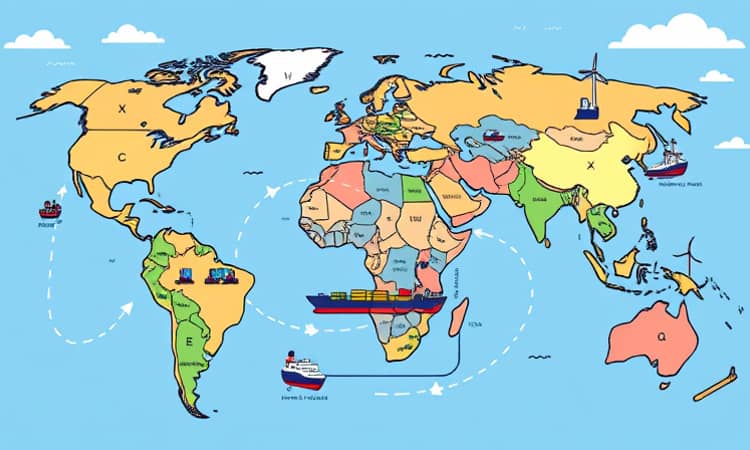
In the past decade, trade economics shifted dramatically from a singular focus on cost minimization to a dynamic pursuit of resilience and innovation-driven expansion. As we step into 2026, global GDP growth is projected at 2.6%-2.7% amid digital and green transitions, signaling both challenges and promises for businesses and economies worldwide.
Fueled by technological advances, evolving political alliances, and pressing environmental commitments, the world economy is becoming more interconnected than ever. Despite rising fragmentation pressures, diversified players can unlock new growth opportunities by navigating regional blocs, harnessing digital trade, and championing sustainability.
Regionalization and Value Chain Reconfiguration
Today, nearly two-thirds of global trade occurs within complex value chains that are being reshaped by geopolitical tensions and strategic policies. Companies and governments alike are recalibrating supply networks to balance efficiency with security.
Key trends include:
- Nearshoring to minimize disruption risks and shorten lead times
- Strengthening regional trade agreements such as RCEP and CPTPP
- Diversifying manufacturing footprints from China to Vietnam, India, and Indonesia
In North America, for example, US-based manufacturers are increasingly sourcing components from Mexico and Canada to mitigate potential tariff shocks. Similarly, Europe is deepening ties with Eastern Europe and North Africa, leveraging proximity for agile production and enhanced supply chain security.
Technological and Digital Trade Innovations
The rise of cross-border e-commerce booms has levelled the playing field for small and medium enterprises. Online platforms, powered by AI-driven logistics and advanced analytics, allow businesses of all sizes to reach global consumers.
Blockchain and fintech innovations are streamlining financial flows:
- Smart contracts automating payment settlements
- Central bank digital currencies facilitating instant settlement
- Tokenized cross-border payment networks reducing costs
With digitally deliverable services accounting for 27% of global trade and growing, data centers and cloud infrastructure investments are soaring. Major markets such as China, the United States, and India reported over 200% gains in leading tech stocks in late 2025, a testament to the global AI adoption boom.
Geopolitical Realignments and Trade Dynamics
We are witnessing a game of economic chess, where tariff measures and strategic alliances shape trade flows. Protectionist policies such as US Section 232 tariffs on semiconductors and minerals have prompted retaliatory measures and an accelerated shift to alternative markets.
Key geopolitical shifts include:
- The rise of South-South trade, led by Asia and increasingly by Africa and Latin America
- De-dollarization efforts through BRICS-backed payment systems
- The WTO’s 14th Ministerial Conference focusing on dispute settlement reform
In this environment, companies are adopting multi-market strategies, securing diverse supply corridors, and investing in political risk analysis tools to maintain their competitive edge. Strategic partnerships, both regional and cross-continental, are emerging as vital pillars of stability.
Sustainability and Green Trade Imperatives
Environmental concerns are no longer a peripheral issue but a central driver of trade policy and corporate strategy. Carbon border adjustment mechanisms, green shipping routes, and circular economy initiatives are reshaping operational models.
By late 2025, 113 nations had pledged to cut emissions by 12% by 2035, fueling demand for low-carbon goods and services. Investors are channeling capital into:
- Renewable energy projects
- Green hydrogen production
- Water-efficient technologies
Brands that align with sustainability goals enhance consumer loyalty and open new markets. For example, exports of eco-friendly products—from electric vehicles to biodegradable packaging—are growing faster than conventional goods, underscoring the value of environmental alignment in global trade.
Risks, Resilience, and Strategic Insights
The road ahead is littered with uncertainties. Policy volatility, tightening global finance, and vulnerabilities in low-income and conflict-affected markets pose genuine risks. However, history has shown that adversity sparks innovation.
Market watchers will keep an eye on:
- Potential AI-driven market bubbles
- Escalating tariff reprisals and trade countermeasures
- Rapid evolution of tokenized payment infrastructures
- Debt sustainability and potential capital controls in EMDEs
Despite these headwinds, services sector resilience and private investment flows provide a buffer. The adaptation of stockpiling strategies post-pandemic, combined with digital trade acceleration, has enhanced the robustness of global commerce.
Conclusion: Embracing an Interconnected Future
The global market in 2026 may appear fragmented, but beneath the surface lies a web of interdependencies. Businesses and nations that embrace regional diversification, champion digital and green technologies, and forge South-South partnerships will thrive.
Adaptability and strategic foresight are the keystones of future success. By aligning operations with sustainability goals, investing in fintech and AI solutions, and engaging in robust political risk management, stakeholders can unlock the vast potential of an interconnected yet resilient economy.
In this era of unprecedented change, the greatest opportunities belong to those who navigate complexity with creativity and purpose.