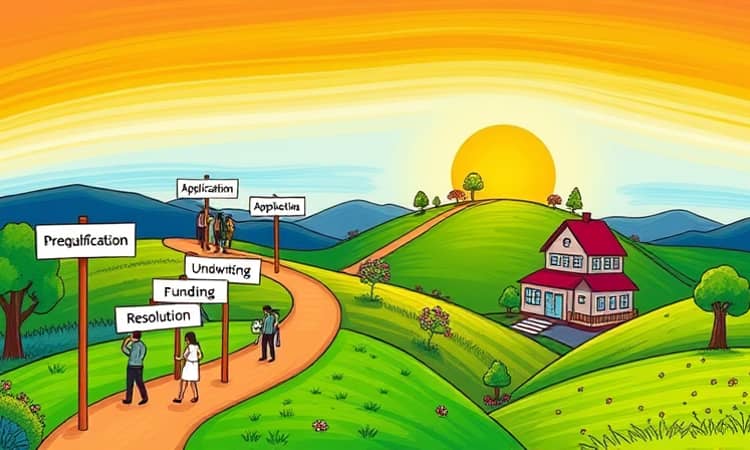
Every loan begins with a spark of hope and ends with a story of responsibility fulfilled. Understanding the steps along this path can empower borrowers and lenders alike to navigate complexities and celebrate successes.
In today’s digital age, technology shapes each phase of the loan journey. Yet at its heart, this process is deeply human: it’s about dreams, diligence, and trust.
Below, we explore each stage in depth, offering practical guidance, inspiring insights, and proven best practices to ensure a smooth, successful journey from origination to final payoff.
1. Pre-Qualification: Laying the Foundation
At the very start, borrowers share basic financial details—income, employment, credit scores—to gauge eligibility. This step is not a commitment, but a promise of transparency.
Digital prequalification tools allow quick assessments, helping applicants understand their potential borrowing power before proceeding further.
Tips for success in this stage:
- Gather accurate pay stubs, tax returns, and credit report summaries.
- Use online calculators to estimate debt-to-income ratios.
- Review your credit history for inaccuracies and resolve issues early.
2. Formal Application: Sharing Your Story
Once prequalified, borrowers submit a detailed application through portals or secure mobile apps. Supporting documents—IDs, bank statements, tax filings—must be uploaded and verified.
Loan origination systems (LOS) guide applicants by flagging missing information and simplifying uploads, ensuring fewer delays and smoother progress.
Comprehensive application portals reduce errors and set clear expectations for both parties.
3. Processing and Document Verification: Building Trust
Lenders and their teams dive into verifying every detail. They confirm identities, review income documents, order appraisals for real estate, and check business financials for commercial loans.
Automation integrates directly with accounting and banking systems, speeding up data checks and alerting staff to any gaps in real time.
This phase underscores the principle that accuracy underpins borrower confidence and lender risk management.
4. Underwriting: The Heart of Credit Evaluation
Underwriters evaluate creditworthiness, weighing credit scores, income stability, collateral value, and alternative data sources such as payment history on utilities or rent.
Advanced AI and machine learning models now complement traditional rules-based systems, offering nuanced risk assessments that can widen access to credit.
Key considerations for underwriting:
- Debt-to-income ratio under target thresholds strengthens approval chances.
- High-value collateral or strong business projections may offset weaker credit scores.
- Transparent communication if terms need adjustment fosters mutual understanding.
5. Approval, Closing, and Disbursement: Sealing the Deal
Approval triggers a flurry of final compliance checks and document signings. Borrowers receive loan agreements detailing rates, schedules, and fees.
Disbursement methods vary: lump-sum transfers, staged tranches, or direct payouts into escrow accounts for mortgages.
A well-managed closing, supported by streamlined digital signing, ensures both parties leave the table confident and informed.
6. Servicing and Repayment: Nurturing Relationship
With funds disbursed, the servicing phase begins. Borrowers receive statements, autopay options, and reminders to ensure on-time payments.
Loan management systems (LMS) track schedules, calculate interest accruals, and provide portals for borrowers to update information or request modifications.
Proactive communication strategies—such as early reminder alerts—can dramatically reduce late payments and build goodwill.
7. Delinquency, Collections, and Resolution: Overcoming Hurdles
If payments are missed, lenders initiate a structured escalation: initial reminders, formal notices, negotiations, and if necessary, collections efforts.
Borrowers facing hardship may benefit from refinancing, loan modifications, or payment holidays. Collaborative solutions often yield the best recovery outcomes.
At this critical juncture, empathy and flexibility, backed by clear policies, lead to mutually beneficial resolutions whenever possible.
Best Practices for Every Stakeholder
Across all stages, certain guiding principles unify successful loan experiences:
- Maintain transparent, timely communications to build trust.
- Leverage integrated digital tools to reduce manual errors.
- Regularly review borrower feedback to refine processes.
- Ensure compliance with evolving regulations and industry standards.
By weaving these practices into each phase, lenders can enhance efficiency, manage risks, and foster lasting relationships—while borrowers navigate their financial journeys with clarity and confidence.
Conclusion: A Journey of Empowerment
The lifecycle of a loan is more than a sequence of steps; it’s a narrative of ambition, diligence, and collaboration. Each stage offers opportunities to reinforce trust, deploy innovation, and uphold responsibility.
Whether you’re a first-time homebuyer or a seasoned business owner, understanding these stages empowers you to make informed decisions, anticipate challenges, and celebrate milestones.
As technology continues to evolve, the human dimension remains paramount. By combining digital efficiency with empathy and transparency, borrowers and lenders can transform what once felt like a complex ordeal into an inspiring journey toward shared success.