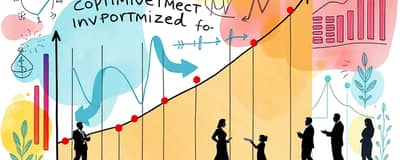
In a world dominated by data and algorithms, it is often the power of a good story that drives decisions, emotions, and ultimately, market movements. Narratives with emotional punch have a unique ability to capture attention, spread contagiously, and shape collective behavior on an unprecedented scale.
This article explores the emerging field of narrative economics, examining how viral stories influence investment choices, consumption patterns, policy debates, and macroeconomic outcomes. We trace the conceptual foundations, outline the mechanisms of narrative spread, review historical and contemporary case studies, and offer practical insights for investors, firms, and policymakers seeking to navigate this powerful dynamic.
Conceptual Foundations of Narrative Economics
Economist Robert Shiller defines narrative economics as “the study of the spread and dynamics of popular narratives, the stories, particularly those of human interest and emotion, and how these change through time, to understand economic fluctuations.” At its core, narrative economics treats stories not as afterthoughts but as stories as inputs into economic behavior and macro outcomes.
Where classical economics centers on rational agents and behavioral economics exposes cognitive biases, narrative economics brings to light how study of human-interest narratives influences what people perceive as possible, safe, risky, or inevitable. It distinguishes two key dimensions:
- Stories as Input vs Output: Traditional marketing sees stories as branding outputs. Narrative economics treats them as inputs that shape everyday decisions.
- Narratives vs Raw Information: Beyond mere facts, narratives package emotions and frames into memorable formats such as memes, slogans, and anecdotes.
- Macroscale Impact: Popular narratives can sway millions simultaneously, coordinating beliefs and actions across markets and societies.
Mechanisms: How Narratives Spread and Influence
The impact of a narrative unfolds through a sequence of stages that mirror epidemic dynamics. Each phase amplifies the story’s reach and embeds it within collective memory.
- Narrative Emergence: A compelling storyline captures initial attention, often through a vivid anecdote or metaphor.
- Attention & Emotion: Emotional resonance drives individuals to share the narrative with peers.
- Viral Spread: Like a contagion, the story follows an epidemic curve—slow takeoff, rapid rise, peak, and eventual decay or mutation.
- Expectation Shifts: As the narrative saturates public discourse, it reframes how people interpret data and events.
- Collective Behavior & Market Outcomes: Coordinated actions based on shared beliefs amplify the narrative’s real-world impact on prices, investment, and policy.
These mechanisms illustrate how epidemic patterns of story diffusion generate powerful feedback loops between popular sentiment and economic variables. The same 20% price drop can be a buying opportunity under one narrative or a crash signal under another.
Historical Case Studies: Stories that Shaped Economies
The Great Depression offers a striking example of narrative-driven outcomes. Despite a swift stock market rebound after October 1929, pervasive stories of moral excess, frugality, and technological unemployment turned a sharp downturn into a decade-long slump. The term “Roaring Twenties” itself only gained widespread moralizing use after 1929, reinforcing public hesitancy to spend.
In the mid-2000s, long-standing real estate narratives—rooted in frontier land tales and the American Dream of homeownership—combined with speculative hype to inflate housing prices globally. The persistent storyline that “property never loses value” influenced lenders, builders, regulators, and buyers alike. Even after the crisis, luxury real estate sections in leading journals fueled renewed optimism, demonstrating how narratives can resurge with fresh imagery.
Political anecdotes, such as the story of the Laffer curve drawn on a napkin, exemplify how simplicity and vividness can propel policy change. This tax-cut narrative spread contagiously in the 1980s, shaping major fiscal reforms regardless of empirical debates about its validity.
During and after World War I, war profiteering tales—like the incident of a woman striking a boastful businessman—fueled public anger and justified higher taxes and regulation. Similarly, overproduction and underconsumption narratives resurfaced during the Depression, influencing Keynesian demand-management policies for decades.
Implications for Investors, Firms, and Policymakers
Understanding narrative economics offers strategic advantages and practical tools for decision-makers at every level.
- Investors should monitor emerging stories in social media, news outlets, and public debates to anticipate sentiment shifts and market volatility.
- Firms can harness powerful tool for decision-making by crafting authentic narratives that resonate with customers, employees, and partners, aligning value propositions with deeper emotional drivers.
- Policymakers must recognize how rhetoric frames public support for fiscal and regulatory measures, using transparent narratives to build trust and guide expectations.
By tracking keywords, analyzing citation patterns, and observing narrative lifecycles, stakeholders can detect early signs of epidemic story diffusion. This quantitative approach complements traditional metrics and reveals invisible currents of collective belief.
Moreover, strategic communication campaigns can be designed to introduce corrective narratives, mitigate panic, or foster long-term confidence. A central bank facing inflation concerns, for example, might deploy a narrative emphasizing stability, resilience, and shared sacrifice to temper runaway expectations.
As technology accelerates the speed and reach of storytelling—from viral videos to AI-generated content—the stakes of narrative economics have never been higher. Frame perceptions of risk and reward carefully, and stories can be harnessed as transformative levers rather than uncontrolled wildfires.
Conclusion
The narrative economy reveals that markets are not driven solely by fundamentals or rational models, but also by the powerful stories we tell each other. Understanding these narratives illuminates the deep connections between emotion, attention, and economic behavior.
In an age of constant information overload, the ability to craft, detect, and shape meaningful narratives is a defining skill for investors, entrepreneurs, and policymakers alike. By embracing the principles of narrative economics, we gain a richer, more human-centered lens on how stories move markets—and how we, in turn, can move them toward more stable, equitable, and prosperous futures.