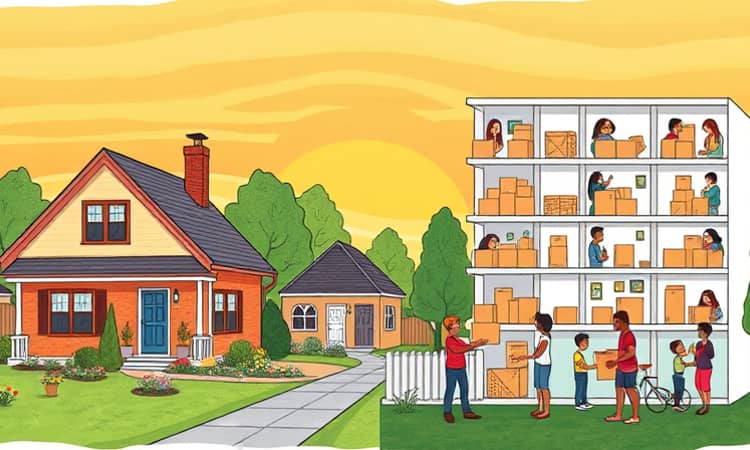
In early 2026, prospective homeowners and renters face a pivotal question: should you continue renting or take the leap into homeownership? With mortgage rates near 6.3%, inventories rising, and 57.7% of U.S. counties now cheaper to buy than rent, this decision carries both financial and emotional weight.
As homes and apartments change hands across the country, understanding the data and personal implications can empower you to make a choice that aligns with your goals and lifestyle.
Current Market Snapshot
The national average home value sits at $357,445, up marginally over the past year, while rents average $1,487 per month. Analysts project rents rising 2–3% in 2026, roughly matching inflation, whereas home prices may climb 1–4% depending on region.
Major coastal metros still favor renting in cost, but 210 of 364 U.S. counties now show buying a three-bedroom home consumes a smaller share of local wages than renting the same space. Aided by lower rates and growing incomes, more renters—particularly the median 40-year-old first buyer—are weighing ownership.
Financial Breakdown: Costs and Equity
Comparing monthly housing costs goes beyond rent checks. Homeowners build value through principal paydown and appreciation, while renters pay for immediate shelter without long-term wealth creation.
- Equity building and wealth creation: Owners of a $400K home at 6.2% could see approximately $12,000 in Year 1 equity gains.
- Cost predictability of fixed mortgage: Locking in a 30-year rate shields you from rent increases projected at 2–3% annually.
- monthly payments decline for buyers: 2026 marks the first year since 2020 that average mortgage payments have eased.
- Tax advantages: Deductible mortgage interest and property taxes can offset ownership expenses.
However, buying requires an upfront down payment—often 5–20% of the purchase price—and owners shoulder maintenance and repair costs. In high-priced metros, the gap between renting and owning may still favor renting in the short term.
Renting: Stability and Flexibility
Renting appeals to those seeking minimal upfront commitment and the freedom to relocate. Monthly rents are predictable in most leases, and increasing supply in some overbuilt markets has even led to flat or declining rates.
- No down payment barrier: Move in with limited initial funds.
- Flexible mobility: Easier to change neighborhoods or cities.
- Predictable budgeting: Landlords handle major repairs and property upkeep.
- stabilizing rents moderate budget pressure: Slower rent growth in select markets helps renters save.
Still, renters miss out on equity and long-term wealth accumulation. Continued rent increases and the opportunity cost of waiting—where home prices grow faster than incomes—can erode potential savings.
Regional Variations: Where Buying Wins
Affordability in 2026 leans strongly toward the Midwest and South. In counties like Peoria, IL, and Wayne, MI, buying a three-bedroom home consumes under 15% of local wages versus over 20% for renting.
In contrast, nearly all West Coast metros still favor renting. Emerging hotspots like Columbus, Indianapolis, and Kansas City combine affordability with proximity to universities and growing job markets.
2026 Trends Shaping Your Decision
Several forces are at play this year:
Rising sales activity: NAR forecasts a 14% jump in home sales as inventory climbs and rate lock-ins fade.
Builder incentives: Over 80% of new homes now include rate buydowns, with many offering mortgages near 4%.
Supply gains: NAHB projects a 1% uptick in single-family starts, though zoning reforms are needed for townhome growth.
Personal Factors to Consider
Beyond the numbers, reflect on your lifestyle and plans:
- Job flexibility versus community roots.
- Readiness to handle maintenance and home repairs.
- Ability to meet down payment and closing cost requirements.
- Long-term horizon: Staying put five years or more can amplify homeownership benefits.
Decision Tools and Expert Insights
Calculate your break-even horizon: compare your projected equity gains against rent savings. Factor in closing costs, home appreciation, and potential repairs.
As Realtor.com’s Danielle Hale notes, “Affordability improves as incomes outpace home prices,” while NAR’s Lawrence Yun predicts, “Home sales will rise 14% in 2026,” driven by increased inventory and lower borrowing costs.
Waiting carries its own risk: at 3% annual home appreciation, a $400,000 property could cost $416,000 next year, negating any rate advantage you might gain.
Conclusion: Choose with Confidence
Ultimately, the rent vs. buy debate hinges on your financial health, life stage, and risk tolerance. Weigh the solid benefits of ownership—equity growth, tax deductions, and payment stability—against the flexibility and lower upfront cost of renting.
Whether planting roots in a family home or enjoying the freedom of renting, an informed decision today can shape your financial future for years to come.