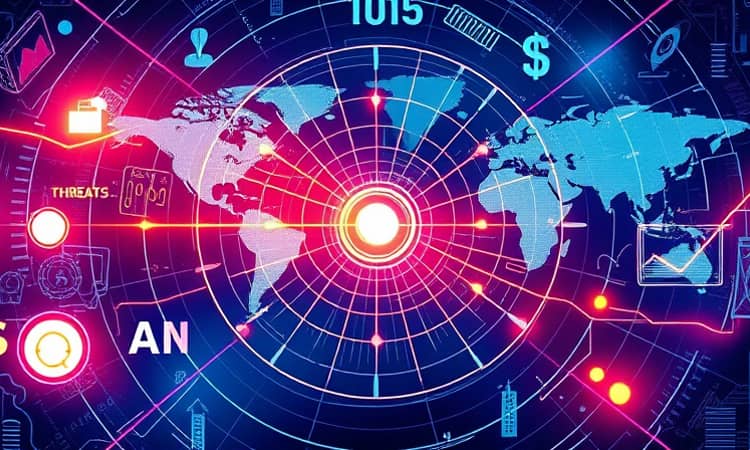
In an era defined by rapid technological advances and shifting geopolitical tides, having a robust risk monitoring tool is no longer optional—it’s essential. Like a radar screen lighting up with blips, your financial radar must constantly scan for emerging threats while highlighting new pathways for growth.
Drawing on data-driven insights and metaphorical frameworks, this article equips you with early detection tools to navigate 2026’s most volatile currents. We begin by examining primary threat signals, then pivot to actionable opportunities that reward proactive vigilance.
Emerging Threat Signals: Decoding Economic and Market Instability
Economic volatility tops the global risk agenda. AI-fueled hype has propelled 40% of U.S. GDP growth and 80% of stock market gains in recent years, despite marginal productivity improvements. This hypergrowth dynamic mirrors past asset bubbles, raising fears of a sharp correction as underlying fundamentals weaken.
Meanwhile, shadow banking activity—especially in China—operates with minimal transparency. Leverage levels remain unknown, amplifying contagion risk if credit markets seize up. Compounding concerns, inflationary pressures spiked after new tariffs, and labor markets have cooled, straining household budgets.
Geopolitical & Trade Risks on the Radar
Great-power rivalry is driving de-dollarization efforts as Russia and China expand BRICS alliances. The U.S. dollar’s historic dominance faces erosion, injecting volatility into currency markets.
Concurrently, sanctions on major Russian oil producers have widened price spreads, and secondary sanctions threaten to curtail global trade volumes. Ambiguous U.S. trade policies—shaped by midterm election promises—leave businesses exposed to sudden tariff shifts.
- Expansion of alternative currency blocs
- Secondary sanctions on energy exports
- Tariff uncertainty tied to 2026 elections
Technological Disruptions and Cyber Threats
As AI advances, so do the capabilities of malicious actors. AI-driven malware and deepfakes can cripple supply chains, scam customers, and erode trust in digital systems. Banks and corporations face the risk of prolonged downtime and reputational loss if cyber defenses lag.
On the crypto front, unbacked tokens and unstable stablecoins pose liquidity run risks. A sudden sell-off could trigger forced liquidations, straining both crypto-native platforms and traditional banks with tokenized exposures.
Fraud, Crime, and Compliance Imperatives
Financial crime remains a moving target. The upcoming Nacha Phase I rules (effective March 20, 2026) require high-volume institutions to adopt heightened regulatory clarity on payment monitoring. Meanwhile, shell companies continue as a favorite tool for money laundering, bribery, and sanctions evasion.
To combat these threats, firms must modernize AML/BSA/CFT frameworks, emphasizing beneficial ownership transparency and real-time transaction screening. Deep collaboration with regulators will be key to staying ahead of evolving sanctions regimes.
- AI-enhanced fraud detection overdue for upgrade
- Mandatory Nacha Phase I compliance
- Global sanctions crackdowns in 2026
Opportunities: Turning Threats into Gains with Regulatory & Innovation Wins
Amid these headwinds lie clear growth avenues. The 2025 crypto and stablecoin framework, along with the pending GENIUS Act rules (July 2026), offers banks a chance to develop cash-backed digital payment rails and reclaim market share from non-bank issuers.
AI’s powerful pattern recognition can also be harnessed for KYC automation, fraud detection, and operational efficiency. Organizations with mature data strategies will realize significant ROI when they integrate transformative AI applications into compliance and risk functions.
Strategic Radar Upgrades for Institutions and Investors
To capitalize on changing regulations and technologies, institutions must:
- Enhance third-party risk management with continuous monitoring
- Invest in cloud-based cyber defenses and incident response plans
- Redesign BSA/AML governance to embed AI-driven analytics
Investors should also watch demographic and policy shifts in immigration, nutrition aid, and retirement security—all of which can reshape consumer demand and labor supply in the coming years.
Building a Proactive Financial Radar
Mastering your financial radar means integrating real-time risk monitoring with scenario planning. By simulating asset bubble corrections, interest rate spikes, and sanctions events, you can stress-test portfolios and operations before exposures crystallize.
Adopting a culture of vigilance requires cross-functional teams—risk, compliance, technology, and strategy—working in concert. Establish clear escalation protocols, and ensure leadership reviews threat dashboards regularly.
Ultimately, your radar’s value lies not just in detecting threats but in highlighting opportunities that emerge in times of disruption. Firms that continuously scan economic volatility, regulatory shifts, and technological disruptions will be best positioned to thrive in 2026 and beyond.
By pairing adaptive strategies for banks with cutting-edge risk tools, you can safeguard assets, empower stakeholders, and unlock growth in a world defined by change.